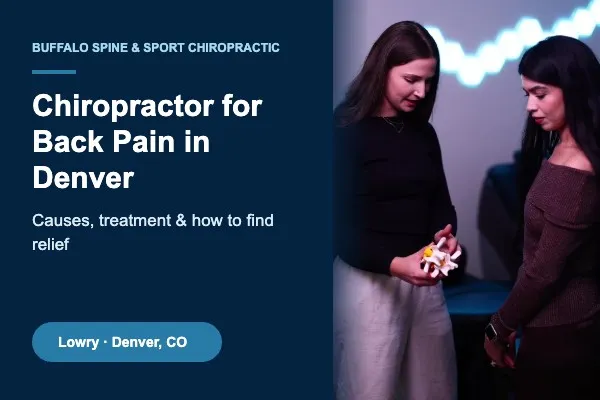
Chiropractor for Back Pain in Denver | Causes & Relief
Chiropractor for Back Pain in Denver: Causes, Treatment & How to Find Relief
By Dr. Meghan Jeske, DC · Buffalo Spine & Sport Chiropractic, Denver · Updated November 2026
Back pain is one of the most common reasons people see a doctor, and one of the leading causes of missed work worldwide. Most adults will deal with it at some point. For some it's a brief flare after yard work. For others it's a daily pain that shapes how they sit, sleep, and move.
The good news is that most back pain improves with conservative care, and chiropractic treatment is one of the most widely used options. Here's what typically causes back pain, how chiropractic care works, and when it's time to get help, from the team at Buffalo Spine & Sport Chiropractic in Denver's Lowry neighborhood.
What causes back pain?
Most back pain is caused by strain or irritation of the muscles, ligaments, joints, or discs of the spine. Common triggers include lifting with poor mechanics, long periods of sitting, sudden awkward movements, repetitive stress, and injuries from sports or car accidents. In many cases, several of these factors add up over time rather than one single event.
Here are the most common sources:
Muscle and ligament strains
The muscles and ligaments that support your spine can be overstretched or strained by lifting something heavy, twisting while bending, or doing more activity than your body is used to. Strains often cause a dull ache, muscle spasms, and stiffness that makes it hard to stand up straight.
Joint dysfunction
Your spine is made of vertebrae connected by small joints called facet joints. When these joints become stiff or irritated, they can cause localized pain, reduced movement, and tightness in the surrounding muscles. The sacroiliac joints, where the spine meets the pelvis, are another common source of low back and buttock pain.
Disc problems
Between each vertebra sits a disc that acts as a cushion. A disc can bulge or herniate, and when it presses on a nearby nerve it can cause pain, numbness, or tingling that travels into the leg. That radiating leg pain is known as sciatica.
Posture and lifestyle factors
Long hours at a desk, looking down at a phone, driving, and inactivity all place steady stress on the spine. Weak core and hip muscles, poor sleep, and stress can make back pain more likely and slower to resolve.
Changes that come with age
As we get older, discs lose some of their height and joints can develop arthritic changes. These changes are extremely common and don't always cause pain, but they can contribute to stiffness and reduced flexibility.
How does chiropractic care help back pain?
Chiropractic care helps back pain by restoring normal motion to stiff or irritated spinal joints, reducing muscle tension, and improving how your spine and surrounding muscles work together. Treatment usually combines spinal adjustments with soft tissue work and targeted exercises to relieve pain and help prevent it from coming back.
Clinical guidelines from groups like the American College of Physicians recommend trying nondrug treatments first for most low back pain, and spinal manipulation is among the options they list. That makes chiropractic care a reasonable first step for many people before turning to medication, injections, or surgery.
Here's how the main parts of treatment work.
Spinal adjustments
An adjustment is a controlled, specific movement applied to a joint that isn't moving well. The goal is to improve mobility, ease pain, and reduce the muscle guarding that often comes with back injuries. Adjustments can be done by hand or with gentle instruments, and your chiropractor will choose techniques based on your comfort and condition.
Soft tissue therapy
Tight, overworked muscles are part of almost every back pain case. Techniques like myofascial release, trigger point work, and instrument assisted soft tissue therapy help relax those muscles and improve circulation to the area.
Spinal decompression
For some disc related pain and sciatica, spinal decompression therapy uses gentle, controlled traction to reduce pressure on the discs and nerves. It's often used alongside adjustments and exercise for people who haven't responded well to other care.
Therapeutic exercise
Exercise is what makes results last. Your chiropractor may give you stretches to restore flexibility and strengthening exercises for the core, glutes, and hips so your spine has better support day to day.
Additional therapies
At Buffalo Spine & Sport Chiropractic, we also offer laser therapy and shockwave therapy to help calm inflammation and support healing in irritated tissue.
What should you expect at your first chiropractic visit?
Your first visit starts with a conversation about your symptoms, when they began, what makes them better or worse, and your health history. From there, your chiropractor will typically:
Perform an exam. This includes checking posture, range of motion, and muscle strength, plus orthopedic and neurological tests to pinpoint the source of pain.
Order imaging if needed. Most back pain doesn't require imaging, but it may be recommended after significant trauma, when certain warning signs are present, or when symptoms aren't improving.
Explain the findings. You should leave with a clear understanding of what's causing your pain.
Build a treatment plan. Your plan will outline the treatments, visit frequency, and at home exercises that fit your goals.
How many chiropractic visits does it take to fix back pain?
The number of visits depends on how long you've had pain and what's causing it. A recent muscle strain may improve noticeably within a few visits over one to two weeks. Longer standing pain or a disc injury usually takes several weeks of care. At Buffalo Spine & Sport Chiropractic, we will reassess your progress regularly and adjust the plan as needed.
When is back pain a medical emergency?
Get emergency care right away if back pain comes with any of the following:
Loss of bladder or bowel control
Numbness in the groin or inner thighs
Weakness in the legs that is getting worse
Fever, unexplained weight loss, or a history of cancer
Pain after a major fall or car accident
Severe pain that doesn't change with position or rest
These can signal a serious condition that needs immediate medical evaluation.
What can you do at home to ease back pain?
A few simple habits can help while you heal:
Keep moving. Gentle walking usually helps more than bed rest, which can make stiffness worse.
Use ice or heat. Ice can help in the first day or two after a strain. Heat often feels better for stiff, tight muscles.
Change positions often. If you sit for work, stand up and move every 30 to 45 minutes.
Watch how you lift. Bend at the hips and knees, keep the load close, and avoid twisting while lifting.
Support your sleep. Sleeping on your side with a pillow between your knees, or on your back with a pillow under them, can take pressure off the low back.
Frequently asked questions about back pain and chiropractic care
Is chiropractic care safe for back pain?
For most people, chiropractic care is a safe, conservative option for back pain. The most common side effect is mild soreness for a day or so after treatment. Your chiropractor will screen for conditions that call for a different approach.
Should I see a chiropractor or a doctor for back pain?
For most back pain without warning signs, a chiropractor is a good place to start. If you have any of the emergency symptoms above, see a medical doctor or go to the ER first.
Can a chiropractor help with sciatica?
Yes. Chiropractors commonly treat sciatica with adjustments, spinal decompression, and exercises aimed at reducing pressure on the irritated nerve.
Does cracking your own back help?
It may feel good briefly, but it tends to move the joints that are already mobile rather than the ones that are stuck. A chiropractor targets the specific joints that need it.
Will my back pain come back?
Back pain does come back for many people, which is why treatment should include exercises and habit changes, not only pain relief.
Find relief from back pain in Denver
You don't have to plan your life around back pain. The team at Buffalo Spine & Sport Chiropractic evaluates the cause of your pain and builds a treatment plan that fits your body, your job, and your goals. Book an appointment to get a clear diagnosis and start feeling like yourself again.
Call (720) 916-8625 or visit us at 130 Rampart Way, Suite 110, Denver, CO 80230 to schedule your appointment.