Chronic Lumbar Strain Treatment Denver | Buffalo Spine & Sport
Chiropractic, Sports Injury, Chronic Lumbar Strain
Overcoming Chronic Lumbar Strain: The Clinical Athlete Protocol
Short answer: Chronic lumbar strain improves when we calm the irritated tissues, restore segmental control, and rebuild load tolerance in a planned progression. Our Clinical Athlete Protocol combines precise spinal assessment, manual care, graded strength work, and adjunct therapies to reduce recurring low back pain and help you return to lifting or running with clearer rules and fewer surprises.
You rest your back for a week, maybe two. It feels better, you test the waters with squats, deadlifts, or a tempo run, and by the next morning that same tight band across your low back is back. You repeat the cycle, rest again, then flare again, and start to wonder if this is just how your back will be.
We see this pattern every week in our Denver clinic. In this article we will walk through what chronic lumbar strain actually is, why it keeps coming back, the phased Clinical Athlete Protocol we use, where tools like shockwave, nonsurgical spinal decompression, and cold laser therapy fit, and what your first visit with us looks like.
Key takeaways
Chronic lumbar strain is usually a combination of overloaded spinal muscles and irritated fascia, plus poor segmental control, not a single torn muscle that never healed.
Recurring low back pain often reflects weak endurance of the multifidus and gluteal muscles, and poor load management, more than a permanent structural problem.
An effective protocol uses clear phases over 8 to 16 weeks, with specific exercises, hold times, and load progressions, rather than random stretches and occasional rest.
Shockwave, nonsurgical spinal decompression, and cold laser therapy can speed tissue recovery and pain control, but they do not replace strength and movement retraining.
Red flag symptoms like leg weakness, bowel or bladder changes, or unrelenting night pain need medical evaluation before we talk about a sports chiropractic plan.
What chronic lumbar strain actually is and why it persists
Chronic lumbar strain means your low back muscles and connective tissues in the lumbar region have been irritated for more than twelve weeks. The usual suspects are the lumbar erector spinae, quadratus lumborum, thoracolumbar fascia, and the small multifidus muscles that sit right along the spine. By this point, the tissues are not acutely torn. They are sensitized and overloaded.
Pain persists because the small stabilizers lose endurance, the larger global muscles try to brace everything, and the spine loses its fine control. You feel stiffness, not just sharp pain. Research on chronic low back pain shows that only around forty percent of people with symptoms past three months recover fully in a year. The rest have ongoing or fluctuating pain if they do not change how they move and load the spine.
Another reason chronic lumbar strain hangs around is nervous system sensitivity. After repeated flares, your brain starts to treat normal loads as threats. A weight that used to feel like sixty percent of your max can feel like ninety percent. The goal of treatment is not only to calm the tissues, but also to retrain the system so your back stops overreacting to normal forces.
Root causes of recurring low back pain in active adults
1. Loss of segmental control at L4 L5 and L5 S1
Most of the motion in your lumbar spine happens at the L4 L5 and L5 S1 segments. In a healthy spine, each segment contributes a few degrees of flexion and extension so the total motion is shared. With chronic strain, the deep multifidus at these levels often atrophies. We see side to side differences in bulk and delayed activation when we test them manually or with ultrasound in some settings.
When those deep stabilizers are late to fire, you get micro movements of two to three degrees that repeat with every rep. Over thousands of cycles, the ligaments and fascia complain. You feel this as a band of ache across the belt line after volume days or long runs. Without restoring segmental control, rest alone never solves the problem, it only quiets it temporarily.
2. Hip and thoracic mobility deficits that force the low back to move too much
If your hips only flex to eighty or ninety degrees before your pelvis tucks, your lumbar spine has to flex more to get you to the bottom of a squat or to reach the bar in a deadlift. The same thing happens with limited thoracic rotation during running. Your low back twists and side bends to make up the difference, rep after rep.
The lumbar spine is built more for stability than for big rotation. It tolerates about two degrees of rotation per segment. When the hips and upper back are stiff, the lumbar segments are asked to rotate more than they like. Chronic lumbar strain is often the result. We see this especially in people who sit all day in Lowry or downtown Denver, then try to lift heavy or run hard in the evening without addressing that stiffness.
3. Load errors in training and daily life
Most flares are not random. They follow a spike in load. Maybe you jump your deadlift from three sets of five at seventy percent to five sets at eighty five percent in one week. Maybe you go from ten mile weeks to twenty mile weeks of running because the weather finally turned nice in Central Park. The tissues were not ready for that jump, and they let you know the next morning.
We also see hidden load. Long car commutes to Aurora, repeated child carrying, or a new standing desk used with poor foot support all add up. The spine has a weekly capacity, just like your legs do. If your total bending, lifting, and impact load jumps more than about ten to twenty percent from one week to the next, your risk of strain goes up. Our job as a sports chiropractor in Denver is to help you see and control those spikes.
The Clinical Athlete Protocol for chronic lumbar strain
Phase 1: Calm and control (weeks 0 to 2)
In the first one to two weeks, our goal is to reduce pain enough that you can move without guarding. We rarely recommend full rest. Instead, we modify loads. For lifters, that might mean no loaded flexion past about thirty degrees and no sets above fifty percent of your estimated one rep max. For runners, we may shift to brisk walking or short run walk intervals on flat ground.
Typical exercises in this phase include supine diaphragmatic breathing for five minutes, twice daily, to reduce paraspinal tone. We add hook lying pelvic tilts, two sets of fifteen reps, focusing on smooth motion. We also use low load multifidus activation in prone, lifting the belly slightly away from the table for ten second holds, ten repetitions, one to two times per day. Pain during these drills should stay at or below three out of ten.
Phase 2: Endurance and patterning (weeks 2 to 6)
Once your baseline pain is lower and you can flex and extend through at least fifty to sixty degrees without a sharp catch, we shift to building endurance. Research on chronic low back pain shows that improved trunk endurance correlates well with better function, even if pain is not completely gone. Here we train the spine to tolerate time under tension, not just single efforts.
We often use side planks on knees or feet, holding twenty to thirty seconds, three sets per side, aiming for a total plank time of ninety seconds without form loss. Bird dog variations are done with eight to ten second holds, eight reps per side, focusing on keeping the pelvis level. Hip hinges with a dowel along your spine teach you to move from the hips while keeping the lumbar curve consistent. We start with bodyweight only, two to three sets of ten reps, three days per week.
Phase 3: Strength and load progression (weeks 6 to 12)
In this phase we rebuild your ability to handle real training loads. For barbell athletes, that often means returning to deadlifts, squats, and presses. For runners, it means higher mileage and hills. The rule we use is simple. Weekly load, whether pounds lifted or minutes run, should not jump more than about ten to fifteen percent. If you are deadlifting one hundred thirty five pounds for three sets of five without pain, your next step might be one hundred fifty pounds for three sets, not two hundred five.
We like tempo work here. Three second eccentrics on Romanian deadlifts at sixty to seventy percent of your estimated max, three sets of eight, twice per week. Single leg work such as split squats, three sets of eight to ten per leg, builds hip strength so the lumbar spine does not have to carry every demand. For runners, we may program two to four runs per week, starting at about seventy percent of your previous peak weekly minutes, then building slowly.
Phase 4: Return to sport and resilience (weeks 12 and beyond)
By twelve weeks, many athletes can tolerate near full training volume if they have been consistent. The focus now is resilience. We introduce more variable and unpredictable loads, like farmer carries, sandbag work, and change of direction drills, always with clear rules. Pain can be present, but it should not spike more than two points during or after a session and should settle within twenty four hours.
We also address lifestyle loads. That might mean breaking up long desk blocks in Cherry Creek with two minute movement breaks every thirty to forty five minutes, or adjusting lifting technique at work. The goal is that your spine can handle random life stressors, not just perfect gym form.
Where shockwave, decompression, and cold laser therapy fit
Shockwave therapy for lumbar strain delivers focused acoustic pulses to thickened fascia, tendon insertions, and stubborn trigger points. For chronic lumbar strain, we often target the quadratus lumborum and gluteal tendon attachments. This can reduce pain and improve local blood flow. Shockwave does not rebuild strength or control. It is an adjunct that can make the rehab exercises more tolerable and effective.
Nonsurgical spinal decompression for disc and joint pressure uses a computer controlled table to gently cycle traction through the lumbar spine. We use it when there is evidence of disc involvement or facet joint compression along with your strain. Sessions often last fifteen to twenty minutes. Decompression can reduce pressure and give irritated tissues a break, but it does not replace active loading. We pair it with progressive exercise in the same plan.
Cold laser therapy for lumbar soft tissue irritation uses low level light to influence cellular metabolism and local inflammation. For chronic lumbar strain, we apply it along the paraspinal muscles and fascia. Some patients notice quicker reduction in soreness between sessions. The current evidence supports it as a pain modulator and possible healing adjunct, not as a stand alone cure. We always anchor care in movement, strength, and education.

Precise core drills retrain the deep stabilizers that protect your lumbar spine during sport.
Red flags that need medical evaluation before chiropractic rehab
New or progressive leg weakness, foot drop, or difficulty lifting the big toe against resistance.
Loss of bowel or bladder control, new urinary retention, or saddle anesthesia in the inner thighs or groin.
Unrelenting night pain that does not change with position, especially with unexplained weight loss or history of cancer.
Fever, chills, or feeling systemically unwell along with new severe low back pain.
History of significant trauma, such as a fall from height or high speed collision, followed by acute back pain.
What your first visit at Buffalo Spine and Sport Chiropractic involves
On your first visit, we start with a detailed conversation. We want to know exactly how your recurring low back pain behaves. What movements set it off, how long flares last, what you do for training, and what you want to get back to. We ask about red flag symptoms and previous imaging. If anything suggests a medical issue outside our scope, we coordinate with your physician first.
Then we move to a focused exam. That includes lumbar range of motion measured roughly in degrees, hip mobility testing, and strength checks for your glutes, hamstrings, and trunk. We use orthopedic and neurologic tests to rule out significant disc herniation or nerve root involvement. You will also perform basic movement patterns like a bodyweight squat, hip hinge, and single leg stance so we can see how your spine and hips share the work.
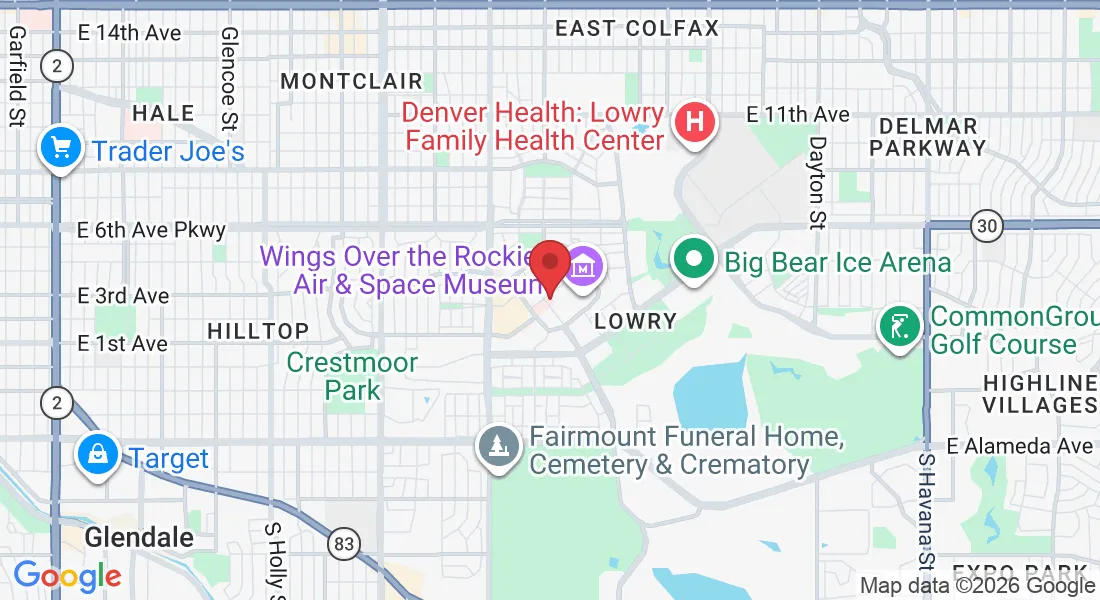
Before you leave, we outline a clear plan. That includes which phase you are starting in, which exercises to do with specific sets, reps, and hold times, and what to change in your current training this week. If adjunct therapies like shockwave or nonsurgical spinal decompression make sense, we explain exactly why and how often we would use them. Our clinic is located at 130 Rampart Way, Suite 110, Denver, Colorado 80230, in the Lowry neighborhood, and we regularly work with active adults from nearby areas like Glendale and the broader metro area.
Ready to talk through your back, not just rest it again Call Buffalo Spine and Sport Chiropractic at 720 916 8625 to book with Dr. Macauley Mackintosh, or reach out through our online scheduling to set up your first visit.
Frequently asked questions about chronic lumbar strain
How do I know if my recurring low back pain is chronic lumbar strain or something more serious
You can suspect chronic lumbar strain when pain sits mainly in the muscles of the low back, flares with activity, eases with relative rest, and has been present for more than twelve weeks. Red flags like leg weakness, bowel or bladder changes, or unrelenting night pain suggest medical evaluation first. A structured exam with a spine focused clinician helps sort this out.
Is it safe to keep lifting weights if my low back keeps flaring
It is usually safe to keep lifting if your pain stays mild, does not shoot into the legs, and settles within twenty four hours, but the loads and movements need adjustment. We often reduce intensity to around fifty to sixty percent of your max, limit deep flexion, and focus on tempo and control. The goal is to keep training while you rebuild capacity, not to push through sharp pain.
Can a sports chiropractor in Denver really help with long term lumbar strain
A sports chiropractor in Denver can help by combining hands on care, movement assessment, and a progressive loading plan that respects your sport. Manual therapy can reduce pain and stiffness in the short term. The bigger impact comes from identifying your specific control or mobility deficits, then coaching you through an eight to twelve week strength and endurance plan that fits your training life.
Should I get an MRI for chronic lumbar strain before starting treatment
Most people with chronic lumbar strain do not need an MRI before starting treatment, especially if there are no red flag signs like severe neurologic changes. Imaging often shows age related findings that do not change the plan. A careful history and exam guide conservative care first. If your symptoms fail to improve or new concerning signs appear, then imaging can be considered with your physician.
Do I have to stop running completely to let my lumbar strain heal
You usually do not have to stop running completely for lumbar strain, but you probably need to reduce volume and intensity. Many runners do well with a temporary shift to run walk intervals, flatter routes, and a weekly mileage cut of twenty to forty percent. We then rebuild by ten to fifteen percent per week while you strengthen hips and trunk so your back can tolerate impact again.
What does lumbar strain treatment in Denver typically cost and how many visits will I need
Lumbar strain treatment in Denver varies in cost depending on clinic, insurance, and use of adjunct therapies, so we always review fees with you up front. Many active adults see meaningful change over six to twelve visits spread across eight to twelve weeks, with home exercises in between. We adjust visit frequency based on your goals, schedule, and how your back responds to loading.
Suggested URL slug: chronic-lumbar-strain-denver-clinical-athlete-protocol
SEO title tag: Chronic Lumbar Strain Treatment Denver | Buffalo Spine & Sport
Meta description: Chronic lumbar strain keeps flaring when you lift or run. Learn our phased Clinical Athlete Protocol for recurring low back pain from Buffalo Spine & Sport Chiropractic in Denver.
Featured image file name: chronic-lumbar-strain-clinical-athlete-protocol-denver.jpg
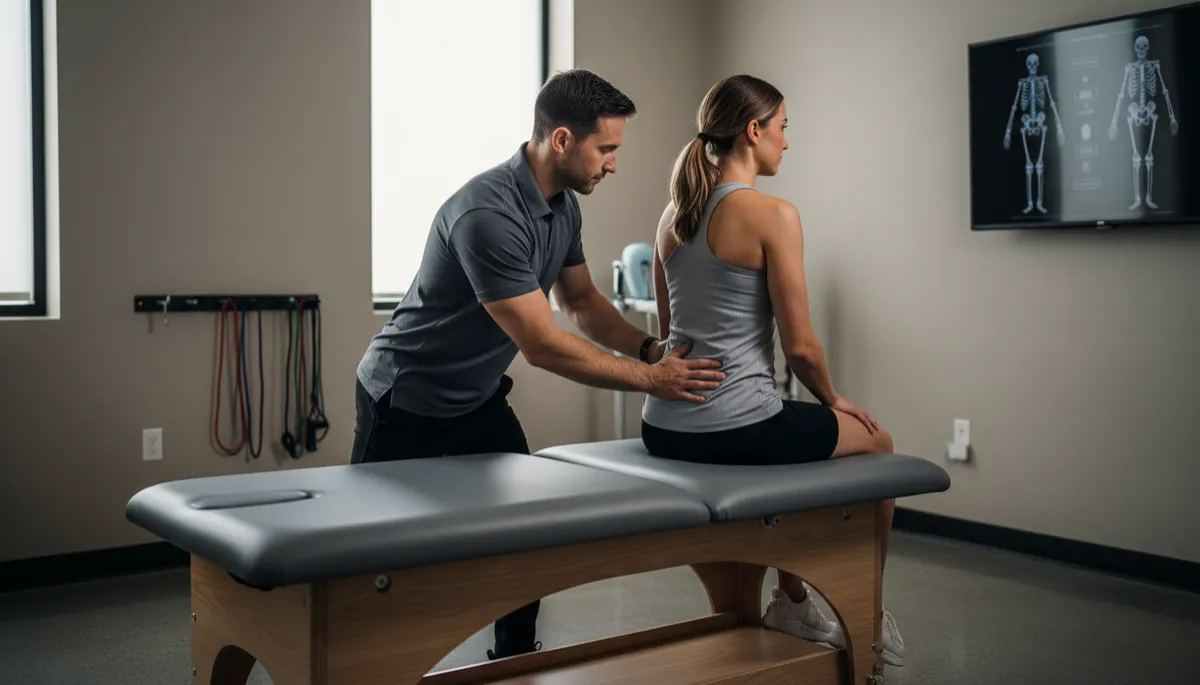
Featured image alt text: Sports chiropractor in Denver guiding an athletic adult through a low back assessment in a modern neutral toned clinic.
FAQ plain text for schema:
Q1: How do I know if my recurring low back pain is chronic lumbar strain or something more serious
A1: You can suspect chronic lumbar strain when pain sits mainly in the muscles of the low back, flares with activity, eases with relative rest, and has been present for more than twelve weeks. Red flags like leg weakness, bowel or bladder changes, or unrelenting night pain suggest medical evaluation first. A structured exam with a spine focused clinician helps sort this out.
Q2: Is it safe to keep lifting weights if my low back keeps flaring
A2: It is usually safe to keep lifting if your pain stays mild, does not shoot into the legs, and settles within twenty four hours, but the loads and movements need adjustment. We often reduce intensity to around fifty to sixty percent of your max, limit deep flexion, and focus on tempo and control. The goal is to keep training while you rebuild capacity, not to push through sharp pain.
Q3: Can a sports chiropractor in Denver really help with long term lumbar strain
A3: A sports chiropractor in Denver can help by combining hands on care, movement assessment, and a progressive loading plan that respects your sport. Manual therapy can reduce pain and stiffness in the short term. The bigger impact comes from identifying your specific control or mobility deficits, then coaching you through an eight to twelve week strength and endurance plan that fits your training life.
Q4: Should I get an MRI for chronic lumbar strain before starting treatment
A4: Most people with chronic lumbar strain do not need an MRI before starting treatment, especially if there are no red flag signs like severe neurologic changes. Imaging often shows age related findings that do not change the plan. A careful history and exam guide conservative care first. If your symptoms fail to improve or new concerning signs appear, then imaging can be considered with your physician.
Q5: Do I have to stop running completely to let my lumbar strain heal
A5: You usually do not have to stop running completely for lumbar strain, but you probably need to reduce volume and intensity. Many runners do well with a temporary shift to run walk intervals, flatter routes, and a weekly mileage cut of twenty to forty percent. We then rebuild by ten to fifteen percent per week while you strengthen hips and trunk so your back can tolerate impact again.
Q6: What does lumbar strain treatment in Denver typically cost and how many visits will I need
A6: Lumbar strain treatment in Denver varies in cost depending on clinic, insurance, and use of adjunct therapies, so we always review fees with you up front. Many active adults see meaningful change over six to twelve visits spread across eight to twelve weeks, with home exercises in between. We adjust visit frequency based on your goals, schedule, and how your back responds to loading.